分类: Uncategorized

  • Die Casting Mold Design: Key Points for High-Quality Production

    Die Casting Mold Design: Key Points for High-Quality Production

    Key Takeaways

    • Precise draft angle design can reduce manufacturing costs by up to 25%
    • Optimal parting line selection is critical for minimizing post-processing requirements
    • Advanced cooling system design can improve cycle times by 30-40%
    • Strategic gating system design directly impacts part quality and production efficiency

    Introduction

    With two decades of precision die casting mold design experience, I’ve learned that successful manufacturing begins long before the first component is produced. At RY Castings, we transform complex engineering challenges into cost-effective, high-performance solutions.

    Critical Design Considerations

    1. Draft Angle: The Cornerstone of Efficient Mold Design

    Draft angle is more than a technical specification—it’s the key to seamless part extraction and mold longevity. Our design approach follows NADCA guidelines:

    • Recommended draft angles:
      • Vertical surfaces: 1-2 degrees
      • Complex geometries: 3-5 degrees
      • Textured surfaces: Up to 7 degrees

    By optimizing draft angles, we:

    • Reduce friction during part ejection
    • Minimize potential surface damage
    • Extend mold life cycle
    • Decrease post-processing costs

    2. Parting Line Selection: Precision Engineering

    Strategic parting line placement is crucial for:

    • Minimizing visible mold lines
    • Reducing secondary machining operations
    • Ensuring consistent part quality
    • Optimizing material flow dynamics

    Our approach:

    • Analyze part geometry holistically
    • Utilize advanced 3D simulation tools
    • Consider material shrinkage characteristics
    • Implement multi-axis parting strategies

    3. Gating System Design: Controlling Metal Flow

    An intelligent gating system is the circulatory system of die casting. Our design principles:

    • Balance metal velocity (30-50 m/s)
    • Minimize turbulence
    • Ensure complete cavity filling
    • Reduce potential defect formations

    Key design strategies:

    • Multiple gate configurations
    • Progressive filling techniques
    • Computational fluid dynamics (CFD) analysis
    • Runner system optimization

    4. Cooling System: Thermal Management Mastery

    Effective cooling is the heartbeat of efficient die casting. Our cooling system design focuses on:

    • Uniform temperature distribution
    • Rapid and consistent heat removal
    • Minimizing thermal gradients
    • Reducing cycle times

    Advanced cooling techniques:

    • Conformal cooling channels
    • Advanced heat transfer simulations
    • Optimized water/coolant flow rates
    • Thermal barrier coatings

    Cost-Saving Methodology

    By integrating these design principles, RY Castings helps clients:

    • Reduce manufacturing costs
    • Improve part quality
    • Decrease production time
    • Enhance overall manufacturing efficiency

    Compliance and Standards

    Our design approach adheres to:

    • ISO 9001:2015 Quality Management
    • NADCA Product Specification Standards
    • ASTM International Casting Specifications

    FAQ

    How much can proper mold design reduce production costs?
    Typically 15-30% through optimized design and reduced secondary operations.

    What materials work best for die casting molds?
    H13 tool steel, SKD61, and advanced high-temperature alloys are most common.

    How often should molds be maintained?
    Regular inspection every 50,00-100,00 cycles; preventive maintenance is key.

    Conclusion

    Die casting mold design is a sophisticated blend of engineering precision and strategic thinking. At RY Castings, we don’t just design molds—we engineer manufacturing solutions.

    Transforming complex challenges into seamless production.

  • Exploring Die Casting: A Guide to Common Types and Materials

    Exploring Die Casting: A Guide to Common Types and Materials

    Die casting is a versatile and efficient process for producing metal parts with high precision and intricate details. It involves injecting molten metal into a mold under high pressure, which then solidifies to form the desired shape. This guide will delve into the two main types of die casting—cold chamber and hot chamber—as well as the most common materials used in the process: aluminum, zinc, magnesium, and copper.

    Cold Chamber vs. Hot Chamber Die Casting

    Die casting machines are categorized into two main types: cold chamber and hot chamber.

    Cold Chamber Die Casting:

    • Process: In cold chamber die casting, the molten metal is ladled from a holding furnace and poured into a horizontal shot sleeve before being injected into the mold. This method is typically used for metals with higher melting points, such as aluminum and copper.
    • Advantages: It is suitable for metals that could damage the machine’s components if they were to come into contact with the hot gooseneck, as is the case with hot chamber die casting.

    Hot Chamber Die Casting:

    • Process: Hot chamber die casting involves an injection system that is immersed in a vessel of molten alloy. The molten metal is directly injected into the mold from this system. This process is commonly used with lower melting point metals like zinc and magnesium.
    • Advantages: It offers a faster production rate and lower costs due to the continuous flow of metal from the furnace to the mold.

    Common Materials Used in Die Casting

    Die casting can be performed with a variety of metals, each offering unique properties that make them suitable for different applications.

    Aluminum Die Casting:

    • Properties: Aluminum is lightweight, has good strength, and excellent thermal and electrical conductivity. It is also highly resistant to corrosion.
    • Applications: Commonly used in automotive parts, electronic housings, and consumer products.

    Zinc Die Casting:

    • Properties: Zinc is easy to cast, has good strength and ductility, and can be easily plated or painted.
    • Applications: Ideal for small, intricate parts such as gears, fittings, and hardware.

    Magnesium Die Casting:

    • Properties: Magnesium is the lightest of all structural metals, offering a good strength-to-weight ratio and excellent damping capacity.
    • Applications: Used in automotive and aerospace industries for components that require lightweight construction.

    Copper Die Casting:

    • Properties: Copper alloys offer high thermal and electrical conductivity, as well as excellent corrosion resistance.
    • Applications: Commonly used in heat sinks, electrical components, and cookware.

    Die casting is a dynamic industry with ongoing advancements in technology and materials. As manufacturers continue to explore new alloys and refine existing processes, the potential for innovation in die casting remains vast. Whether it’s the precision of cold chamber die casting or the efficiency of hot chamber die casting, the choice of material and process depends on the specific requirements of the application.

  • Die Casting: The Magic of Metal Shaping

    Die Casting: The Magic of Metal Shaping

    In the realm of industrial manufacturing, there exists a technology that seems like magic, capable of transforming molten metal into various shaped parts in an instant. This technology is known as die casting. Let’s unveil the mystery of die casting and explore this enchanting process together.

    What is Die Casting?

    Die casting is a metal-forming process that uses high pressure to inject molten metal into a precision mold. It’s a race between speed and precision, where the metal fills every corner of the mold under high pressure, then rapidly cools and solidifies to form the desired part. This process is not only efficient but also capable of producing complex, thin-walled, and internal cavity parts with precision.

    The Magic of Die Casting

    1. High-Pressure Injection: The high-pressure head of the die casting machine injects molten metal into the mold at a speed that can reach several meters per second, ensuring the metal fills the mold uniformly.
    2. Precision Molds: Molds are the key to die casting. They are typically made of materials that can withstand high temperatures and wear, accurately replicating the desired part shape.
    3. Rapid Cooling: After the metal is injected into the mold, it cools and solidifies rapidly. This process usually takes only a few seconds, ensuring the size and shape of the part are stable.
    4. High Efficiency: Die casting is capable of quickly producing a large number of parts, suitable for mass production.
    5. Precision Parts: Die casting can create parts with thin walls and internal cavities, which are difficult to achieve with other processes.

    Applications of Die Casting

    Die casting technology is widely used in various industries such as automotive, aerospace, electronics, and home appliances. In the automotive industry, die-cast parts like engine blocks and transmission housings not only reduce weight but also improve performance. In electronic products, die-cast parts like phone mounts and computer heat sinks are favored for their lightness and strength.

    The Future of Die Casting

    With the advancement of technology, die casting technology is also continuously improving. The use of new materials, optimization of mold design, and the enhancement of automated production all make die casting processes more efficient and environmentally friendly. In the future, die casting technology will continue to play an important role in manufacturing, bringing more convenience to our lives.

    Die casting, this seemingly simple process, actually contains endless possibilities. It has not only changed the face of manufacturing but also brought more convenience to our lives. Let’s look forward to the surprises that die casting technology will bring us in the future!

  • Five important things in die casting product design

    Five important things in die casting product design

    Whether the die casting product design is reasonable or not is crucial to the production and cost of die castings

    such as the selection of parting surface, the opening of the inner gate, the launch of the mechanism layout, mould structure and manufacturing difficulty, alloy solidification and shrinkage law, casting precision guarantee, the type of defects, etc., will be die casting itself structure process for the premise of the merits of the structural design of the structural design of the structure is good or bad, a direct impact on the production yields and costs, this paper introduces the die casting Structural design requirements

    Key Elements of Rational Die-Cast Product Design:

    1. die casting design reasonable structure and wall thickness:

      An important principle in producing die-cast components is to balance the structure and wall thickness of the parts. Wall thickness affects cooling speed and solidification patterns, thus influencing the final quality of the parts. Uniform wall thickness ensures even cooling, reducing the risk of defects such as hot spots and shrinkage.a, Eliminate internal side concavity; simplify the mould structure, die-casting mould temperature is relatively high, the internal structural parts are easy to expand leading to jamming;
      b, avoid or reduce the core drawing part;
      c, avoid core cross; Reasonable die casting structure can not only simplify the structure of the die casting mould, reduce the manufacturing cost, but also improve the casting quality.

    2. Reasonable mould release angle for die casting design:

      The role of reinforcing bar is the wall thickness is thinned, used to improve the strength and rigidity of the parts, reduce the casting shrinkage deformation, as well as to avoid deformation of the workpiece from the mould when ejecting, filling used to act as an auxiliary circuit (metal flow path);
      Die casting bar thickness should be less than the thickness of the wall, generally take the thickness of the place of 2/3 ~ 3/4, the setting of the reinforcement can increase the strength and rigidity of the parts, while improving the die casting processability. But must pay attention to the following points:
      ① Distribution should be uniform and symmetrical;
      ② and casting connection root to have rounded corners;
      ③ Avoid multiple bar crossings;
      The width of the bar should not exceed the thickness of the wall to which it is connected. When the wall thickness is less than 1.5mm, it is not suitable to use reinforcement;
      ⑤ The mould release slope of the reinforcement should be greater than the casting slope allowed in the casting cavity.

      Minimum mould exit slope reference
      Alloy Type Zn Al Cu
      Inner Cavity Release Slope 0°20’ 0°32’ 0°45’
      Outer surface demoulding slope 0°10’ 0°15’ 0°30’
    3. die casting design – reasonable reinforcement:

      Ribs play a crucial role in enhancing part strength and stiffness without adding excessive weight or affecting the overall design. However, careful positioning of ribs is necessary to avoid deformation due to uneven cooling or the introduction of stress concentrations that may reduce component fatigue resistance.

      The Relationship Between Die-Cast Part Thickness and Reinforcement Ribs
      Wall thickness of die casting(mm) Thickness of reinforcing ribs(mm)
      0.8-2.5 1.5-2.5
      2.0-3.5 2.5-3.5
    4. die casting design – reasonable machining allowance:

      Die casting design should try to avoid machining, machining will increase the cost of parts. Die casting can’t avoid machining, should try to avoid the design of large cutting amount, structural design as much as possible to facilitate the machine or reduce the machine area, reduce the cost of machine. Die casting on the part of the higher dimensional accuracy requirements, die casting process is difficult to meet the requirements, this time it is necessary to carry out subsequent processing, on this part of the structure, the design should try to reserve machining allowance. Die casting surface strength, hardness than the internal high, machining should pay attention to retain the surface of the densification, so the machining allowance can not be excessive allowance, machine plus too much is likely to produce porosity, external surface defects

      Casting size(mm) ≤100 >100~250 > 250 ~400 > 400 ~630 > 630 ~1000
      machining allowance(mm) 0.5-0.1+0.4 0.75-0.2+0.5 1.0-0.3+0.5 1.0-0.4+0.6 2
    5. Rational Design of Surface Treatment for Die-Cast Components:

      The surface treatment of die-cast components significantly determines the product’s aesthetics and functionality, including wear resistance, corrosion resistance, and conductivity. The surface treatment method for die-cast components should be reasonably designed based on different applications to achieve an economical and visually appealing result.

    In conclusion, rational die-cast design is crucial to ensuring high-quality products. To achieve success, designers must carefully balance factors ranging from structural properties to surface treatment.

  • How to solve the aluminium die casting mold feeder on the parts sealing groove and other important parts of erosion

    How to solve the aluminium die casting mold feeder on the parts sealing groove and other important parts of erosion

    The design of double gate feeding die casting mold, a three-platen mold with peculiar conception

    Die casting process in the current automotive parts lightweight production plays an important role. For some peripheral design for the closed form of the cover type automotive die casting aluminium alloy parts, die design, no matter where to choose the periphery as the gate, will be an important forming part of the die – sealing groove position caused by erosion, resulting in partial failure of the die (generally 20,000 die times or so). Currently, the common countermeasure is to design the die casting mold as a mosaic structure and replace the vulnerable parts.

    Combined with the actual production, put forward a new design scheme, the use of three-plate die – double-centre into the casting structure, optimize the clamping, limit and other structures, matching the die casting machine part of the function, so that theCombined with the actual production, put forward a new design scheme, the use of three-plate die – double-centre into the casting structure, optimize the clamping, limit and other structures, matching the die casting machine part of the function, so that the die casting mould life has been greatly extended, the site production effect is remarkable. A V8 engine chain cover shell, see figure 1, material for A380 aluminium alloy, density of 2.45g/cm³, contour dimensions of 305.059mm × 243.811mm × 88.683mm, its mass is 0.83kg, volume is 309 cm³, surface area of 856.03 c ㎡, the basic wall thickness of ≥ 2.1mm, casting shrinkage is 0.55%, because it is a sealing slot structure, the casting of the surface area of 856.03c ㎡, basic wall thickness ≥ 2.1mm, casting shrinkage is 0.55%. The casting shrinkage rate is 0.55%, because of the sealing groove structure, there are flatness requirements. Production found due to the special structure of the die casting, the inner gate straight to the die casting of the sealing bar installation groove on the inside, resulting in premature cracking of the die casting mould at this location, and lead to the formation of raised cracks on the die casting, due to the installation of the sealing bar position, if the sealing bar is installed here, the die casting will be damaged if the sealing bar is not installed, so the die casting will be damaged.

    Seal bar position, if the die casting cracks, will have a serious impact on the sealing of the die casting, so the surface quality of the casting here has strict requirements. After analysis and testing, the centre into the pouring three-plate mould structure. For the basic situation of the die casting, the preliminary design. The choice of distal pouring to reduce the direct erosion of the two cores in the centre, in line with the general design specifications. Figure 2 shows the initial design.

    Figure 1 Three-dimensional drawing of the part

    Fig. 2 Conventional pouring method

    Fig. 3 Failure location of die casting

    Figure 4 Mould inlay methodAfter the analysis of the aluminum die casting,

    to avoid the position of the sealing groove into the casting, the only location on the aluminum die casting can be selected only two holes in the middle of the die casting, and the basic shape of the die casting is a round cake structure, two holes in the middle position, the tendons were radial umbrella, so the use of the centre of casting for the die casting of the exhaust and so on have a very good effect, and therefore decided to use the double-centre pouring three templates design, see Figure 5.

    After analysis of the aluminum die casting, in order to avoid the sealing groove into the casting position, the only position on the die casting can only choose two die casting holes in the middle, and the basic shape of the die casting is a round cake structure, two holes in the middle of the position, the tendon is radial umbrella, so the casting centre is used for the die casting of the die casting. Exhaust and so on have good results, so decided to use double-centre casting three template design, see Figure 5

    Fig. 5 Design scheme of double-centre cast three-platen die casting mold

    Figure 6 Mould sketch

    categories Two Plate Mould Triple Plate Mould comparative
    Machine Selection UB850T DCC800T A smaller machine option is available for three-plate moulds compared to two-plate moulds.
    Mold life 60000 100000 Three-platen moulds can increase the life of the mould
    Die casting defective rate/% 9.2 2.2 Three-platen moulds reduce mould erosion, which reduces product rejects
    production beat/S 65 68 Advantages of two-platen moulds
    process yield/% 49 42 Conventional two-platen moulds with high process yield

    The die casting mold material is H13, hardness HRC44-46, cutting edge at 45° angle to avoid aluminum sticking. The clamping force of the elastic clamping device is 40kN to avoid premature separation of the moving template and the fixed mold moving plate. The mold guide pillar and template should be made with high precision, the fixed mold fixed plate, fixed mold moving plate and moving template need to be matched with the die casting mold at the same time, and the clamping oil should be evenly distributed. Install the mold on the die casting machine, push the fixed die moving plate by hand, there should be no obvious jamming phenomenon.


  • Influence of Casting Temperature on the Properties of Die-Cast Aluminum Alloys

    Influence of Casting Temperature on the Properties of Die-Cast Aluminum Alloys

    Casting temperature on die casting aluminum alloy properties which influence?

    With the arrival of the 5G communication era, the structure of products in the field of transportation and communication is developing in the direction of integration and lightweight, so the requirements for the thermal performance and load capacity of materials are increasing. For the complex heat dissipation structural parts in the field of communication and and transportation, due to its uneven wall thickness, the requirements for material fluidity and heat dissipation performance are getting higher and higher, and the use of cast aluminum-silicon alloys can meet both its formability and mass production. Traditional Die-Cast Aluminum Alloys, such as ADC12 thermal conductivity of 92 W / (m – K), yield strength of 156 MP, has been unable to meet its performance requirements, domestic researchers according to the composition, process, organization and performance to carry out a series of studies in order to improve the overall performance of aluminum alloys. In recent years, Japan has developed DMS series and DX series of high thermal conductivity casting aluminum alloy, of which DMS1, DMS3, DX17, DX19 alloy thermal conductivity as high as 150~210W/(m-K), however, the yield strength is less than 120 MPa, DMS5 is a replacement of ADC12, the thermal conductivity of ADC12 is about 1.6 times. DMS5 is a replacement for ADC12, with a thermal conductivity about 1.6 times that of ADC12 and a yield strength similar to ADC12. The Al-10Si-0.3Mg die-casting aluminum alloy designed by this project has good fluidity, can be strengthened by heat treatment, the thermal conductivity is close to that of DMS5, the yield strength is higher than that of DMS5, the formability is comparable to that of ADC12, and the corrosion resistance is better than that of ADC12, so it can satisfy the urgent needs of new-generation communication devices and automobile heat dissipation parts for higher thermal conductivity and yield strength., such as ADC12 thermal conductivity of 92 W / (m – K), yield strength of 156 MP, has been unable to meet its performance requirements, domestic researchers according to the composition, process, organization and performance to carry out a series of studies in order to improve the overall performance of aluminum alloys. In recent years, Japan has developed DMS series and DX series of high thermal conductivity casting aluminum alloy, of which DMS1, DMS3, DX17, DX19 alloy thermal conductivity as high as 150~210W/(m-K), however, the yield strength is less than 120 MPa, DMS5 is a replacement of ADC12, the thermal conductivity of ADC12 is about 1.6 times. DMS5 is a replacement for ADC12, with a thermal conductivity about 1.6 times that of ADC12 and a yield strength similar to ADC12. The Al-10Si-0.3Mg die-casting aluminum alloy designed by this project has good fluidity, can be strengthened by heat treatment, the thermal conductivity is close to that of DMS5, the yield strength is higher than that of DMS5, the formability is comparable to that of ADC12, and the corrosion resistance is better than that of ADC12, so it can satisfy the urgent needs of new-generation communication devices and automobile heat dissipation parts for higher thermal conductivity and yield strength.

    The casting temperature has an important influence on the casting performance and quality. Fang Yuanming et al. found that the casting temperature has an important influence on the casting defects by simulating the connecting rod die casting of aluminum alloy, and Wang Shaozhi et al. produced aluminum alloy automobile bracket, and the use of near-liquid-phase line pouring temperature can obtain uniform and fine spherical organization. Using JMatPro software to simulate the liquid phase line of Al-10Si-0.3Mg aluminum alloy is 10 oC higher than that of ADC12, and the selection of the appropriate pouring temperature plays an important role in improving its comprehensive performance. When the low temperature casting, the alloy mobility is reduced, resulting in die casting filling more difficult, using a higher pouring temperature will make the alloy shrinkage increases, the gas solubility in the metal liquid increases, the defects such as loosening and porosity are easy to produce, thus reducing the performance of the alloy or even cause product scrap therefore. This project takes Al-10Si-0.3Mg as the object, studies the effect of casting temperature on its organization, mechanical properties and thermal conductivity, and determines the appropriate casting temperature for Al-10Si-0.3Mg aluminum alloy, aiming to achieve the purpose of improving the alloy properties and enhancing the quality of castings.

    1. Test program

    1.1 Alloy composition

    The Al-10Si-0.3Mg alloy of this test is a self-designed composition, taking into account the mobility, strength and thermal conductivity, and its chemical composition is shown in Table 1. The main raw materials used are 99.9% pure aluminum, 2202 crystalline silicon, pure magnesium ingot, and 75% iron additives.

    Influence of Casting Temperature on the Properties of Die-Cast Aluminum Alloys1

    Table 1. Main components of the alloy wb/%.

    1.2 Preparation process

    Prepare 200 kg of alloy, melting in a 300 kg resistance furnace, the first baking furnace, when the furnace temperature reaches 700 ℃ to add 99.9% pure aluminum ingot, melting for 3 h, to be completely melted ingot and the aluminum temperature reaches 800 ℃ to add 2202 crystalline silica, heating to 850 ~ 900 oC molten silicon, during the period of continuous stirring, until completely melted. Subsequently add iron additives, stirring, to be completely melted add Mg, magnesium block completely immersed in the liquid aluminum, eliminate open flame, stirring for 5 min after the melt refining, refining temperature of 710-730 oC, refining agent using sodium-free calcium-free refining agent, the amount of use according to the 2 kg / t, rotational speed of 250~350 r/min, the gas flow rate of 5~10 L / min. refining time of 20min. After the completion of refining slagging, composition to reach a slightly higher design value, take samples, in the Spectrum M12 (LAB) direct-reading spectrometer to analyze the composition of qualified for die casting, the test process is completed in the same furnace, and the order of low temperature to high temperature.

    DCC280 type 2800 kN die-casting machine is used, its clamping force is 280 k N, the thickness of the material shank is about 15 mm, and the mold surface temperature is controlled by the mold temperature controller, set at 200 ℃. The injection force is 330 k N, injection time is 3.5 s, cooling time is 2.0 s, the stroke position of the charging head in die casting: a fast position is set to 100 mm, the second fast position is set to 250 mm, the position of the selection of the pressurization is 280 mm, the standard tensile specimen bar shaped in Fig. 1. In order to study the effect of casting temperature on the microstructure, mechanical properties and thermal conductivity of the specimen, a total of 650. 680, 720 ℃ three preparations, In order to study the effect of casting temperature on the microstructure and mechanical properties and thermal conductivity of the specimens, a total of 650, 680, 720 ℃ 3 groups of specimens were prepared.

    Influence of Casting Temperature on the Properties of Die-Cast Aluminum Alloys2

    Figure 1:Die-casting mechanical properties of test bars and thermal conductivity specimens

    1.3 Organization performance analysis

    Shenzhen Sansi electronic universal testing machine is used to test the mechanical properties of the tensile test bar, the tensile rate of 1 mm/mm; die-casting Ф12.7 mm × 2 mm standard thermal conductivity specimen (see Figure 1), using the German NeiChi LFA467 laser flash instrument test; from the tensile test bar in the middle of the spacing section of the sample, through the standard sampling procedures for the preparation of metallurgical specimens and corrosion, after the use of Olympus GX53 microscope and Phenom XL desktop scanning electron microscope for microstructure observation and analysis of the specimen.

    2. test results and discussion

    2.1 Microstructure observation

    Figure 2 shows the metallographic organization of the alloy at different casting temperatures. It can be seen that the white circular and elliptical organizations are primary α-Al, and the white α solid solution between short needles and dendrites constitutes (α+Si) eutectic, and a small amount of primary silicon exists. The black dots are pores, and due to the low Mg content of the alloy, only a small amount of Mg2Si is present in a granular state, fishbone, and dendrites. In addition, it can be seen that as the die-casting temperature increases, the pores of the alloy gradually increase, the size of the primary crystal Si and α-Al increases, because the metal aluminum has very good plasticity, but its strength is low, however, with the casting temperature increases, the number of pores in the alloy increases, resulting in the plasticity advantage of the metal aluminum is difficult to reflect, and the primary crystal Si is a brittle should be the phase, the tip and the edge is easy to cause stress concentration, the size of its increase leads to the strength of the alloy further reduced. The strength of the alloy is further reduced by the increase of its size.

    Influence of Casting Temperature on the Properties of Die-Cast Aluminum Alloys3

    Figure 2:Microstructure of Al-10Si-0.3Mg aluminum alloy at different casting temperature

    2.2 X-ray non-destructive examination of the alloy at different casting temperatures

    Figure 3 shows the X-ray nondestructive testing of the alloy at different die-casting temperatures. It can be clearly seen that as the die-casting temperature increases, the pores in the casting gradually increase, from the point-like distribution of pores at 650 oC die-casting to the net-like distribution of pores at 720 oC. When the die-casting temperature increases, the cooling gradient of the metal liquid becomes larger, the volume contraction during solidification is large, and air holes are formed inside the casting, which is consistent with the results observed in the metallographic organization of the casting.

    Influence of Casting Temperature on the Properties of Die-Cast Aluminum Alloys4

    Figure 3:X-ray NDT of Al-10Si-0.3Mg aluminum alloy at different casting temperatures

    2.3 Mechanical properties of Al-10Si-0.3Mg aluminum alloy with different casting temperature

    Figure 4 shows the mechanical properties of the castings with the change of die casting temperature. It can be seen that the average mechanical properties of the die casting specimens decrease with the increase of die casting temperature. When the casting temperature is 650 oC, the alloy tensile strength, yield strength and elongation to obtain the maximum value, respectively, 298MPa, 201MPa, 5.62%. When the die casting temperature rises, other parameters (speed, time, pressure) remain unchanged, filling the end of the die casting temperature will rise accordingly, the solidification time of the alloy increases, resulting in a reduction in its solidification speed, thus causing the alloy grain becomes coarse, primary dendrite and secondary dendrite spacing increases, the number of porosity increases, which leads to the mechanical properties of the alloy deterioration. The performance of die-casting aluminum alloy depends on the morphology, size and distribution of primary α-Al phase, eutectic Si, primary Si, secondary intermetallic compounds and pores.

    Influence of Casting Temperature on the Properties of Die-Cast Aluminum Alloys5

    Fig. 4:Mechanical properties of Al-10Si-0.3Mg aluminum alloy at different casting temperatures

    2.4 Thermal conductivity and density of Al-10Si-0.3Mg aluminum alloy at different casting temperatures

    Figure 5 shows the thermal conductivity and density of Al-10Si-0.3Mg alloy. It can be seen that the thermal conductivity and density of the alloy decreases as the casting temperature increases. This is because, as the casting temperature increases, the number of pores in the alloy increases, and the effective thermal conductive area decreases, which results in a decrease in thermal conductivity of the alloy. At the same time the second phase appearance is changed, resulting in increased lattice distortion. Electrons, lattice vibration waves and electromagnetic radiation is the carrier of heat conduction in the metal, the total heat conduction is the superposition of each carrier conduction, there are a large number of free electrons in the metal, can quickly realize the heat transfer, electronic heat transfer is its main heat transfer mode. Therefore any factor that produces inhomogeneity in the internal organization of the metal increases the scattering of electron waves, which leads to a decrease in the thermal conductivity of the alloy.

    Influence of Casting Temperature on the Properties of Die-Cast Aluminum Alloys6

    Fig. 5:Thermal conductivity and density of Al-10Si-0.3Mg aluminum alloy at different casting temperature

    2.5 Fracture morphology of Al-10Si-0.3Mg aluminum alloy at different pouring temperatures

    Figure 6 shows the fracture morphology of castings after stretching at different pouring temperatures. For Al-Si alloys, the fracture mode of the alloy changes from through-crystal fracture to along-crystal fracture as the size of the dendrites becomes smaller. The second phase in the organization of the alloy in this test is mainly intermetallic compounds, primary crystal Si, eutectic Si, and these second phases have a great influence on the tensile fracture of the alloy. When the die casting temperature is 650 oC, the fracture surface has a large number of tough nest, tough nest is relatively shallow and small, in the fracture surface a large number of distribution of quasi-disintegration surface, at the same time can be seen to distribution of river-like pattern, so the alloy plasticity is relatively good, see figure 6 a. When the die casting temperature is increased to 680 oC, the fracture morphology has the existence of the tearing prongs, the number of tough nests and the size of the reduction, see figure 6 b. From the figure 6 c can be seen. As can be seen from Fig. 6c, the fracture profile at 720 oC has flat surfaces and the number of tough nests is very small, which further deteriorates the plasticity.

    Influence of Casting Temperature on the Properties of Die-Cast Aluminum Alloys8

    Fig. 6: Tensile fracture morphology of Al-10Si-0.3Mg aluminum alloy at different casting temperatures.

    3. Conclusion

    (1) When the casting temperature is 650 oC, the tensile strength, yield strength and elongation of the alloy obtain the maximum value, respectively, 298 MPa, 201 MPa, with the increase of the casting temperature, the cooling rate is small, the size of the primary crystalline Si and α-Al in the organization increases, and the spacing of the primary dendritic crystal and secondary dendritic crystals increases, and the mechanical properties of the alloy decreases.

    (2) With the increase of casting temperature, the alloy absorbs gas seriously, the density of the alloy decreases, the effective thermal conductivity area decreases, which makes the thermal conductivity of the alloy decrease.

    (3) The fracture morphology was observed by scanning electron microscopy, when the casting temperature increased, the number and size of tough nests in the fracture of the alloy decreased, which led to a decrease in the plasticity of the alloy.

  • Influence of die casting process on the mechanical properties of die castings

    Influence of die casting process on the mechanical properties of die castings

    Proper mold design and die casting process are critical to die castings performance

    In recent years, with the accelerated process of automobile lightweighting, aluminum alloy has replaced cast iron as the material of choice for the production of automobile engine cylinder block due to its low density, high strength and good plasticity. Among them, pressure casting is the most common type of aluminum alloy casting process due to high production efficiency, high dimensional accuracy of die castings and low surface roughness value. However, pressure casting also exists with short filling time, exhaust insufficient, resulting in casting porosity, thin-walled castings in the melt solidification is easy to form hot joints lead to cracks, thick-walled castings are prone to shrinkage holes, shrinkage and other problems. Research shows that die casting shrinkage, shrinkage, crack defects easy to cause casting air leakage, affecting the mechanical properties of castings, in order to eliminate shrinkage, shrinkage defects, in the actual production of local pressurization process is widely used. For crack defects, generally used to optimize the mold cooling system, adjust the mold time and control the melting process to be improved or eliminated. A car engine in the extreme cold 30,000 kilometers after the experiment, there is a cold start noise problem, the investigation found that the engine hydrostatic test leakage rate of 32%, the amount of air leakage over the leakage limit of 36.2%, through the casting on the sampling tensile test measured casting tensile strength of 152.8 MPa, yield strength of 104 MPa, are much lower than the standard value: ≥ 200 MPa and ≥ 140 MPa, so it was determined that the engine cylinder block mechanical properties lead to insufficient air leakage exceeded the standard, thus causing the engine cold start rattling problem.

    1. die castings characteristics and defect analysis

    The casting for four-cylinder automobile engine block, billet quality of 9.7 kg, using Buhler 2800T cold chamber die casting machine die casting, aluminum alloy grade for YZAlSi9Cu3, alloy composition see table 1. casting average wall thickness of 15 mm, the maximum wall thickness of 50 mm, the internal has more lubricating oil channel, cooling waterway, oil scale channel and mounting threaded holes, the pin because of the cooling difficulties and higher temperature, the actual die casting process. In the actual die-casting process, the casting thick wall, slender pin near the unavoidable occurrence of shrinkage, shrinkage and cracks and other defects. In addition, due to the cylinder block bearing hole need to withstand due to the piston reciprocating motion of inertia force and moment of inertia caused by the shock vibration, the working conditions are harsh, need high structural strength (requirements: tensile strength ≥200 MPa, yield strength ≥140 MPa), and conventional die-casting process to ensure that casting has such high strength with a certain degree of difficulty. As the bearing hole is the main stress point of the engine, there are many casting holes distributed in the vicinity, the structure is complex, and the wall thickness is large, so the cylinder block bearing hole area selected mechanical experiments with tie rods, the specific location is shown in Fig. 1. through the tensile strength and yield strength test of the tie rods, the results are shown in Table 2, the mechanical properties of the cylinder block casting is insufficient. Observation of tie rod fracture cross-section, the section contains slag, grain size of 7.5 grade, section organization loose, and the casting mechanical properties of insufficient results in line.

    Nfluence of Die Casting Process on Mechanical Properties of Aluminum Castings1

    Table 1 YZAlSi9Cu3 Aluminum Alloy Chemical Composition

    Nfluence of Die Casting Process on Mechanical Properties of Aluminum Castings2

    Fig. 1 Selection position of tie rods for experiments

    Nfluence of Die Casting Process on Mechanical Properties of Aluminum Castings3

    Table 2 Requirements for mechanical properties of castings

    The cylinder block oil marking holes were found to be leaking through hydrostatic testing. Cutting the air leakage location found that the oil marking hole (Figure 2) near the different degrees of shrinkage, shrinkage and loosening. Air leakage location for the casting of the thick wall, aluminum liquid in the solidification process, due to the mold core surface farther away from the mold, the temperature is higher, the surrounding metal liquid has been completely solidified, the center of the thick wall to form an isolated liquid phase area, can not be in the casting of the pressurization stage of the complementary contraction, resulting in the formation of the casting of shrinkage holes, which is the main reason for the cylinder block leakage and the casting of the main reason for the instability of mechanical properties. For the casting mechanical properties of unstable problem investigation, there are four main reasons: first, die-casting process design is unreasonable, especially the main control parameters are high speed speed, high speed starting point, boosting pressure and leave the mold time and so on design is not appropriate; Second, the mold pouring system design is unreasonable, mold cooling system abnormality, mold releasing agent spraying is not appropriate, etc.; Third, the composition of the YZAlSi9Cu3 alloy is super poor, the aluminum ingot melting process abnormality, the die-casting process abnormality, the casting of the cylinder block and the mechanical properties of the main reason. Aluminum ingot melting process abnormality, die casting process entrapped in oxides and piston lubricant combustion products and other impurities; Fourth, the cylinder block casting wall thickness is large, die casting process is prone to shrinkage holes, shrinkage defects.

    Nfluence of Die Casting Process on Mechanical Properties of Aluminum Castings4

    Fig. 2 Location of air leakage in casting hydrostatic test

    2. Analysis and application of local pressurization techniques

    2.1 Mechanisms and Principles of Local Extrusion Technology

    The local extrusion mechanism is shown in Figure 3, which is mainly composed of the working cylinder, extrusion pin, extrusion insert and other ancillary components, and the extrusion mechanism is generally designed on the die frame or core of the die according to the actual situation. Traditional local extrusion technology, due to the extrusion speed is not adjustable, resulting in extrusion action only exists in a moment, can not be continued throughout the solidification of the liquid aluminum pressure, not to mention the pressure can not be adjusted to the time period, so that the timing of the extrusion is not appropriate, extrusion is too early, the extrusion pin into a fixed pin, can not play a complementary role in shrinkage; extrusion is too late, the liquid aluminum has been solidified, the extrusion pin resistance is too large, easy to break. Therefore, the traditional extrusion technology for the elimination or reduction of casting shrinkage effect is very little.

    Nfluence of Die Casting Process on Mechanical Properties of Aluminum Castings5

    Figure 3 Schematic diagram of extrusion pin structure

    At present, most of the enterprises use new extrusion technology, it is in die-casting mold additional built-in cylinder will work cylinder control signal and die-casting machine pressure injection signal chain, in die-casting machine control panel set extrusion moment, extrusion delay, pressure holding pressure and pressure holding time and other parameters, can adjust the extrusion pin extrusion and extraction action, can make the extrusion timing is more appropriate. In the casting solidification process, through the extrusion pin on the semi-solidified liquid phase pressure, change the sequence of aluminum liquid fill shrinkage, the casting wall thickness direction of the central region to play a good fill shrinkage effect, can effectively eliminate casting shrinkage holes, improve the casting organization densification, and enhance the mechanical properties of castings.

    2.2 Application and effect of local extrusion technology

    Combined with the previous experience of casting engine cylinder block and benchmark EA211 cylinder block data, when the extrusion pin program is used near the cylinder block bearing seat, the casting organization is more dense, the tie rod fracture has no shrinkage holes, and the mechanical properties are significantly improved. Since the air leakage point of this engine is located near the oil marking hole, close to the 1st and 2nd cylinder bearing holes, and since each bearing hole is designed with a lubricating oil hole, which also has the risk of air and oil leakage, local pressurization technology is used on each bearing hole, and the pressurized casting blank is shown in Figure 4. However, selecting the appropriate extrusion process is crucial to the casting quality, in order to quickly obtain the optimal extrusion process, orthogonal tests were used, three key parameters of the extrusion process: extrusion pressure, extrusion delay and holding time were selected as the test factors, and three levels of each factor were selected respectively, with the standard orthogonal test L9 (3³) table. The experimental design is shown in Table 3, and the test objective function is tensile strength, yield strength and shrinkage yield rate. Each group of test die casting 5 pieces, in the 1st-3rd cylinder bearing holes each take a tie rod specimen, in the 4th-5th cylinder bearing holes each take a slice, so that each group of experiments consists of 15 experimental tie rods and 10 slices, to take the average of each group of tests as the group of test results. Among them, the shrinkage yield rate takes into account the X-ray flaw data.

    Nfluence of Die Casting Process on Mechanical Properties of Aluminum Castings6

    Fig. 4 Casting blanks with partial extrusion technology

    Nfluence of Die Casting Process on Mechanical Properties of Aluminum Castings7

    Table 3 Table of orthogonal test protocols

    Table 3 shows the results of orthogonal test, the extreme difference of factor A (extrusion pressure), factor B (extrusion delay) and factor C (holding time) are 8.7/9.0, 11.0/12.0 and 17/15, respectively, factor C has the greatest influence on the test results, and it is the main factor causing the instability of the mechanical properties; the extreme difference of factor A is 8.7/9.0 ranked the second, and it is the second main factor; the extreme difference of factor B is the smallest, and it is the secondary factor. factor B has the smallest polar deviation and is the secondary factor. According to the method of extreme difference analysis, the factors affecting the qualification rate of castings are C (holding time), A (extrusion pressure) and B (extrusion delay) in the order of priority. In order to obtain the optimal extrusion process program, it is necessary to further determine the level of each factor according to the value of the objective function. From the K value in Table 3, it can be seen that the tensile strength and yield strength show a similar change rule, so only the tensile strength is taken into account here, and the level 1 of factor A (extrusion pressure) is the largest at 227, followed by level 2, and the level 3 is the worst; the level of factor B (extrusion delay time) is 123 in descending order, and the level of factor C (holding time) is also 123. Therefore, the optimum process can be initially identified as follows Therefore, the optimum combination of process parameters can be identified as A1B1C1, i.e., an extrusion pressure of 140 bar, an extrusion delay of 3 s, and a holding time of 10 s. In addition to this, this group of extrusion process has a high shrinkage yield of castings.

    Fig. 5 shows a slice of the casting using the localized extrusion process, and comparing with Fig. 2, it is found that the problem of shrinkage near the oil marking holes of the casting is significantly improved. Table 3 test data and engineering experience shows that by improving the die casting machine peripheral equipment and adjusting the extrusion process can not only effectively eliminate casting shrinkage, shrinkage problem, but also can improve the mechanical properties of castings. However, the actual production should be considered extrusion pin installation position, extrusion pressure is too large leading to casting deformation or cracks, hydraulic pressure is too large for oil leakage of oil pipe or joints and other issues.

    Nfluence of Die Casting Process on Mechanical Properties of Aluminum Castings8

    Fig. 5 Sections of castings with localized extrusion process

    Theoretical studies show that, by the aluminum liquid filling order, the mold temperature is low on the high gradient distribution, resulting in aluminum liquid from the surface and inside, from high mold temperature to low mold temperature order solidification, the last solidified area if not get aluminum liquid shrinkage, will be due to insufficient shrinkage and the formation of shrinkage holes. Therefore, excluding abnormal factors, the main reason for aluminum alloy die casting shrinkage hole for the aluminum liquid shrinkage is insufficient. However, the solidification sequence of aluminum liquid is affected by many factors, such as: casting structure, pouring system, exhaust system, cooling system and process parameters. Combined with the actual engineering experience, the main use of three kinds of solutions to further improve the casting shrinkage problem, namely, adjust the die-casting process, optimize the mold pouring system and adjust the spraying process.

    Adjustment of process parameters. Aluminum liquid from the barrel into the cavity generally through the slow speed, high speed and boost three stages, in addition, high speed starting point is also an important parameter, the theory of high speed switching point should be located in the liquid to reach the inner sprue near, so as to ensure that the liquid better fill the cavity.

    Research shows that the low speed is too high will lead to the acceleration of the liquid aluminum shock, the formation of rolled gas, the casting is prone to the formation of gas shrinkage holes; low speed is too low, the temperature of the liquid aluminum in the filling before the drop faster, the casting is prone to the formation of cold hard layer. Through the test, it is found that the low speed is set at 0.28 m/s, the starting point of high speed is 710 mm, the high speed is 6.2 m/s, the booster pressure is 1,050 bar, and at the same time, the adjustment of the booster pressure conversion is changed from the speed conversion to the pressure conversion, and the quality of the castings is better. Optimize pouring system. In addition to the distribution of the mold temperature, the lack of aluminum filler shrinkage is also related to the direction and flow of aluminum filling. It was found that the support sprue for the bearing hole was canceled to improve the positional tolerance of the bearing hole, which might be partly responsible for the shrinkage of the casting, so the inner sprue for the bearing hole was restored. At the same time, the thickness of the inner sprue was reduced to 5.5 mm, so that the total area of the inner sprue was about 1,800 mm 2 , and the Φ150 mm ejection piston was used, and the ratio of the piston to the area of the inner sprue was about 9.81 (previously it was 6.9, and even if the high speed reaches the limit speed of the die-casting machine, 7.2 m/s, the speed of the inner sprue is only 49 m/s), and with the setting speed of 6 m/s, the speed of the inner sprue can reach 60 m/s. The setting speed is 6 m/s, and the inner channel speed can reach 60 m/s, which increases the high-speed filling capacity of aluminum liquid. Through the solidification simulation analysis, it was found that the thick-walled area near the oil labeling hole was well compensated for the shrinkage due to the increase of the support sprue and the increase of the inner sprue speed, and the shrinkage problem was basically eliminated.

    3, die-casting process parameters optimization

    After the use of local extrusion process, the mechanical properties of the casting is significantly improved, the tensile strength and yield strength are up to standard, the organization is more dense, shrinkage holes, shrinkage defects significantly reduced. However, as shown in Figure 5, there are still shrinkage holes and shrinkage defects in the thick wall of the casting. In order to completely eliminate the cylinder block gas leakage hidden trouble, need to further improve the die-casting process.

    4. process verification

    By increasing the bearing seat local extrusion technology, adjust the die-casting process parameters, optimize the mold pouring scheme, improve the spraying process, die-casting verification of 500 pieces, all air tightness inspection, the results of 2 pieces of air leakage exceeds the standard, the leakage rate of 0.4%; Sampling 100 pieces of tensile test detection, the average tensile strength of 248.68 MPa, the average yield strength of 182.83 MPa, qualified rate of 100%, solved the engine cylinder block due to casting mechanical properties of unstable air leakage and noise problems.

    5. Conclusion

    (1) automobile engine cylinder block casting wall thickness is large, complex structure, die casting process is prone to shrinkage, shrinkage and cracks and other defects, affecting the mechanical properties of the product. After the use of local pressurization technology, the casting tensile strength and yield strength increased by 62.7% and 75.4%, so the use of local pressurization technology can effectively improve or eliminate casting shrinkage, shrinkage and loosening defects, and significantly improve the mechanical properties of castings.

    (2) Reasonable die-casting process and mold design program on the casting of comprehensive performance has a greater impact, but in the actual die-casting process, selecting the appropriate process parameters is a complex and time-consuming work, the use of orthogonal test can be a comprehensive consideration of the influencing factors of the process parameters, to shorten the search for the optimal process time, it is a kind of scientific optimal process selection method.

    Adjust the spraying process. Reasonable spraying time and spraying position can effectively maintain the mold temperature and prevent the casting from cold segregation, shrinkage or crack defects. The casting leakage position near the oil marking holes, pin slender, high temperature, increased external water cooling device, the use of thermal imaging camera measured after spraying the mold temperature is 209 ℃, is a normal state.

  • Study on the properties of high-strength die cast aluminum alloys

    Study on the properties of high-strength die cast aluminum alloys

    High-strength properties of die cast aluminum alloys play a key role in expanding the application areas of die castings

    Title: Microstructure and Mechanical Properties of High-Strength Al-Si-Mg-Cu Alloy for Die Casting

    Abstract: A new type of Al-Si-Mg-Cu alloy for die casting was designed, developed, and subjected to natural aging and artificial aging treatments at various temperatures. The influence of alloying elements and aging treatments on the alloy’s mechanical properties was analyzed through mechanical testing and metallographic observation. The results showed that increasing the magnesium content in the die cast aluminum alloys, along with the addition of copper, zinc, titanium, and other elements, followed by Sr modification and aging treatment, led to significant improvements in tensile strength and elongation after fracture. The as-cast tensile strength of the optimized alloy exceeded 310 MPa, with a maximum elongation of 5.9%. Under fixed alloy composition, artificial aging enhanced both tensile strength and elongation. However, when aging temperatures were raised within the range of 140 to 170°C, both tensile strength and elongation exhibited a decreasing trend. After a low-temperature aging treatment at 140°C for 8 hours, the material exhibited excellent comprehensive mechanical properties, with an average tensile strength of 377.08 MPa and an average elongation of 3.42%.

    In recent years, due to advancements in die casting technology and the demand for automotive lightweighting, more and more automotive components are being produced using aluminum alloy die casting. These components include automotive engine cylinder blocks, camshaft brackets, wheel hubs, transmission casings, and more. With the continuous development of die casting processes, there is a growing need for die-casting alloys with excellent comprehensive properties. The earliest applied die-casting aluminum alloy was the Al-Si binary eutectic alloy, which exhibited good fluidity, air tightness, low shrinkage, and reduced susceptibility to thermal cracking. It also demonstrated favorable mechanical, physical, and corrosion-resistant properties, making it suitable for casting thin-walled parts and components that require compactness but are not under high stress, such as automotive instrument attachments, covers, casings, and cylinder bodies with cooling fins. For castings with high machining requirements, Al-Si-Mg series, Al-Si-Cu series, and Al-Si-Cu-Mg series alloys are generally used. Among these, the Al-Si series alloy is the most commonly used, with main alloying elements including Si, Mg, Cu, Ti, Zn, Fe, and possibly Cr, Zr, V, Sr, B, Sb, and RE elements. Each element has independent and interactive effects on the alloy properties.

    In ordinary die casting, due to the rapid filling of the mold cavity by the molten metal, gases within the cavity have minimal opportunity to escape and become entrapped in the casting, resulting in the formation of numerous pores. These gases, upon subsequent solution treatment, are prone to thermal expansion, leading to swelling and deformation of the casting. This prevents effective solution treatment and limits performance improvement. However, by subjecting die castings to acceptable lower-temperature aging treatments, strength can be enhanced, stress relieved, dimensions stabilized, and material properties optimized.

    In this study, a novel Al-Si-Mg-Cu alloy for die casting was designed, developed, and subjected to natural aging and artificial aging treatments. The influence of alloying elements and aging treatments on the mechanical properties of the castings was analyzed, aiming to provide reference for its application.

    01 Experimental Content

    1.1 Test Material and Chemical Composition

    The nominal composition of the new die cast aluminum alloys (in mass fractions, hereinafter the same) is: 9% Si, 0.5% Mg, 0.5% Mn, 0.5% Cu, 0.5% Zn, 0.15% Ti, 0.02% Sr, Fe: ≤0.3%, with the balance being Al. Alloying elements or metals added during alloy melting include Al-5Ti-B, Al-10Sr, Mg-10Al, pure zinc, pure copper, etc., and were melted in an induction resistance furnace. When the alloy liquid temperature reached 720°C, nitrogen gas was introduced for degassing treatment. To prevent iron pickup during melting, a graphite crucible was used. Considering the volatilization of certain metal elements during alloying and the actual yield of other metal elements, the measured chemical composition closely matched the design values, as determined by direct-reading spectrometer, as shown in Table 1.

    Study on the Properties of A High-Strength Aluminum Alloy for Die Casting1

    Table 1 Chemical composition of newdie cast aluminum alloys (%)

    1.2 Preparation of die-casting specimens

    Die casting specimen with reference to the standard design, specimen see Figure 1, specimen size see Figure 2, diameter of 6.4 mm, 50 mm pitch, total length of 170 mm. horizontal cold chamber die casting machine, punch diameter of 40 mm. die casting process parameters: pouring temperature of 660 ~ 670 ℃, mold temperature of 150 ℃.

    Study on the Properties of A High-Strength Aluminum Alloy for Die Casting12


    Fig. 1 Diagram of die-casting specimen

    Study on the Properties of A High-Strength Aluminum Alloy for Die Casting13

    Fig. 2 Dimensions of round test bars for die casting mechanical properties

    1.3 Aging Treatment

    To compare the effects of natural aging and artificial aging on the alloy’s mechanical properties, 5 specimens were chosen for each treatment. Natural aging was conducted for 90 days, and artificial aging was carried out at temperatures of 140°C, 155°C, and 170°C for 8 hours each.

    1.4 Mechanical Property Testing

    Tensile testing was conducted on a universal testing machine, and elongation was measured using an extensometer. The tests were conducted at room temperature with a loading rate of 5 mm/min, and each group consisted of 5 specimens for which the average values were calculated.

    1.5 Microstructural Observation

    Identical regions of the specimens were selected for metallographic analysis. The specimens were sequentially polished using sandpapers of grit sizes 400, 800, 1200, and 2000. Subsequently, they were polished using 2.5μm and 1.5μm diamond pastes. Finally, they were immersed in a corrosion solution consisting of 1% HF, 1.5% HCl, and 2.5% HNO3 for 10 to 20 seconds, followed by thorough cleaning with ethanol. Prepared metallographic samples were observed under a metallographic microscope and scanning electron microscope (SEM) to study their microstructure. Elemental distribution in localized regions was determined using energy-dispersive X-ray spectroscopy (EDS) analysis.

    02 test results and discussion

    2.1 Alloy microstructure

    2.1.1 Effect of alloy elements on microstructure

    Study-on-the-Properties-of-A-High-Strength-Aluminum-Alloy-for-Die-Casting124

    Fig. 3 Photographs of metallographic organization of YL104 alloy and Al-Si-Mg-Cu alloy

    Figure 3 shows the organization comparison between YL104 die-casting alloy and Al-Si-Mg-Cu alloy, it can be seen that the white organization in the two alloys is α-Al matrix, and the gray organization between the dendrites is the eutectic organization, but the α-Al matrix in the Al-Si-Mg-Cu alloy is much more rounded, and the size is obviously smaller, and the smallest size can be up to 3 μm. in which a part of the coarse α-Al can be found in Figure 3c. This part of coarse dendrites should be formed in the press chamber, where they solidify, grow up, and are finally pressed into the cavity by the punch. Due to the limitation of magnification, there are still some black unknown tissues that need to be analyzed more minutely.

    According to the Al-Si-Cu phase diagram, the phase composition of the alloy after solidification is [α-Al+Si+Mg2Si+Al5Mg8Cu2Si6] when the Mg content is 0.5% and the Cu content is ≤0.5%. Due to the low content of alloying elements such as Mg, Cu, Zn, etc., most of the added alloying elements such as Mg, Cu, Zn, etc., are dissolved in Al matrix, so it is difficult to detect the characteristic phases formed by the above elements in microstructure photos. It is difficult to find the characteristic phases formed by the above elements. Through EDS analysis, it is found that Mg, Cu, Zn, Si and other alloying elements are dissolved in the α-Al matrix, which plays the role of solid solution strengthening, see Figure 4.

    Study-on-the-Properties-of-A-High-Strength-Aluminum-Alloy-for-Die-Casting5

    Fig. 4 Microstructure and EDS analysis of Al-Si-Mg-Cu alloys

    Further analysis using SEM revealed the presence of dark-colored fibrous structures and blocky bright gray structures, as shown in Figure 5. EDS analysis (with mass fractions of 82.2% for Al and 16.2% for Si) indicated that the fibrous structure corresponds to eutectic silicon (Si). Due to the addition of Sr during the alloy melting phase, the originally elongated plate-like eutectic Si transformed into a fine fibrous structure due to Sr modification. The size of the refined eutectic silicon was around 2μm. The addition of Sr significantly weakened the cracking effect of eutectic Si on the matrix. The bright gray structures correspond to the iron (Fe) phase.

    In aluminum-silicon alloys, iron phases primarily exist as the Chinese character-shaped α-AlFeSi and the needle-like β-AlFeSi phases. However, based on SEM observations, the present Fe phase appeared as blocky, suggesting that it is not one of the above-mentioned phases. According to the research by Lin Chong et al., the addition of Mn to Al-Si alloys results in the formation of blocky Fe phase Al4(Fe,Mn)Si2, which transforms into blocky Al5(Fe,Mn)Si after T6 heat treatment. In the current study, the alloy had a Si content of 9%. Based on EDS spectra analysis (with molar fractions of 74.52% for Al, 4.49% for Fe, 8.23% for Mn, and 12.11% for Si), coupled with the morphology of the iron phase, it was identified as Al5(Fe,Mn)Si. The presence of Mn improved the morphology, leading to a significant reduction in its crack-promoting effect on the matrix. In conclusion, the microstructure of the as-cast alloy is primarily composed of refined α-Al, fibrous eutectic Si, and blocky Fe phase.

    Study-on-the-Properties-of-A-High-Strength-Aluminum-Alloy-for-Die-Casting6

    Fig. 5 SEM photos and EDS analysis of Al-Si-Mg-Cu alloy

    2.1.2 Effect of aging treatment on microstructure

    Study-on-the-Properties-of-A-High-Strength-Aluminum-Alloy-for-Die-Casting7

    Fig. 6 Microstructure and elemental distribution of Al-Si-Mg-Cu alloy after aging at 140°C: (a) Metallographic photo (b) SEM photo (c) Al elemental distribution (d) Si elemental distribution (e) Mg elemental distribution

    Figure 6 depicts the microstructure and elemental distribution of the Al-Si-Mg-Cu alloy after aging at 140°C. It can be observed that the primary microstructure after aging consists mainly of primary α-Al and eutectic Si phases. A comparison with Figure 3b indicates that aging has minimal impact on the morphology and size of primary α-Al; both exhibit fine α-Al dendrites along with a few coarse α-Al dendrites. SEM analysis (Figure 6b) reveals the presence of dispersed black regions within the α-Al matrix. EDS analysis (Figure 6c, Figure 6e) identifies these regions as primarily composed of Al and Mg. In conjunction with previous research by Hu Zhiqi et al., it can be inferred that the β-Al8Mg5 phase, formed in Al-Mg-Si alloys, is re-dissolved into the aluminum matrix through aging treatment, contributing to solid-solution strengthening.

    EDS analysis of the aged microstructure is shown in Figure 7. From Figure 7a, a grayish ring-like feature is visible within the eutectic Si regions, mainly composed of Si and Mg. This is identified as the Mg2Si phase. Irregular-shaped gray regions are also present in the upper-left corner and central region of Figure 7a. EDS analysis (Figure 7b) coupled with the elemental distribution reveals that these regions consist of Al, Mg, Si, and Cu, with a molar ratio of Mg to Cu at 4:1. This leads to the identification of the Al5Mg8Cu2Si6 phase. During die casting, elements such as Mg and Cu, due to their low content, can fully dissolve into the matrix. Through aging treatment, these dissolved strengthening phases precipitate, contributing to dispersion strengthening. Zinc (Zn), with high solubility in aluminum, mainly serves as a solid-solution strengthening element.

    In conclusion, the microstructure of the aged alloy primarily consists of fine α-Al, uniformly distributed passive eutectic Si, dispersed Mg2Si phases, and a small amount of Al5Mg8Cu2Si6 phases.

    Study-on-the-Properties-of-A-High-Strength-Aluminum-Alloy-for-Die-Casting8

    Figure 7: Microstructure and EDS Analysis of Al-Si-Mg-Cu Alloy After Aging (a) SEM Image (b) EDS Analysis Spectrum (c) Distribution of Cu Element (d) Distribution of Mg Element (e) Distribution of Si Element (f) Distribution of Al Element

    2.2 Mechanical Properties

    Tensile testing was performed on as-cast, naturally aged, and artificially aged specimens of the optimized alloy using an electronic universal testing machine, and the results are shown in Figure 8. It can be observed that the average tensile strength of the as-cast alloy is 306.316 MPa, with an average elongation of 4.262%, which is an improvement of 39.1% and 100% compared to YL104 alloy. This improvement can be attributed to the higher content of Mg, Cu, and Zn, as well as the addition of small amounts of titanium and strontium in the Al-Si-Mg-Cu multi-component alloy compared to YL104 alloy.

    Most of the Mg, Cu, and Zn dissolve in the α-Al matrix. During the die casting process, the rapid cooling rate prevents complete precipitation of the alloying elements dissolved in the α-Al matrix, leading to solid-solution strengthening within the matrix. When the Mg and Cu contents are increased from 0.3% to 0.5%, Mg can react with Si to form the Mg2Si phase. Additionally, when the Cu/Mg mass ratio is below 2.5, the strengthening phase Al5Mg8Cu2Si6 forms. This strengthening phase precipitates during aging treatment, contributing to dispersion strengthening and enhancing the alloy’s strength.

    The addition of titanium forms TiAl3, providing heterogeneous nucleation sites and refining the grain size when present at 0.15%. The addition of 0.02% strontium for modification treatment transforms the coarse needle-like eutectic Si into fine fibrous structures, reducing eutectic Si’s propensity for cracking the matrix and greatly improving the alloy’s ductility.

    The presence of Fe can alleviate sticking during die casting, but it is detrimental to the alloy’s mechanical properties. By controlling the Fe content to within 0.3% and introducing 0.5% Mn, the iron phase’s shape transforms from needle-like or plate-like to small blocks with minimal matrix-cracking effects. The addition of Mn significantly reduces the negative impact of the iron phase, thus enhancing the alloy’s performance.

    Study-on-the-Properties-of-A-High-Strength-Aluminum-Alloy-for-Die-Casting9

    Figure 8: Mechanical Properties of the Alloy After Aging

    2.3.2 Effects of Aging Treatment on Alloy Performance

    After natural aging, the average tensile strength of the specimens was 321.077 MPa, with an average elongation of 2.842%. Upon artificial aging at different temperatures, it was found that the specimens aged at 140°C exhibited the highest average tensile strength, reaching 377.081 MPa, with an average elongation of 3.42%. Tensile strength decreased with increasing artificial aging temperature, and elongation also decreased as the aging temperature increased.

    The main phases in the Al-Si-Mg-Cu alloy after solidification are [α-Al + Si + Mg2Si + Al5Mg8Cu2Si6]. Aging treatment had little effect on the morphology and size of the α-Al phase, but it promoted atomic mobility and diffusion, improving the alleviation of local composition segregation and stress caused by rapid local cooling during casting. It also relieved residual stresses within the casting, reducing local stress concentration. This simultaneous increase in alloy strength and maintenance of elongation stability was observed. Furthermore, aging treatment resulted in the precipitation of Mg2Si and a small amount of Al5Mg8Cu2Si6 phases. These strengthening phases dispersed at grain boundaries, contributing to dispersion strengthening and increased strength.

    With increasing aging temperature, more precipitation of strengthening phases occurred, leading to higher artificial aging strength compared to natural aging. However, when the temperature exceeded a certain point, phase coarsening and aggregation could occur, disrupting the integrity of the matrix and causing a decrease in strength. Therefore, strength decreased with rising temperature. An increase in precipitate phases led to greater resistance during deformation, causing reduced alloy ductility and a subsequent decrease in elongation with increasing aging temperature.

    Conclusion

    The microstructure of the new die-casting aluminum alloy primarily consists of α-Al and fibrous eutectic Si. The α-Al grains are fine, with a minimum size of 3μm, and the eutectic Si morphology changes to fibrous, with a size less than 2μm.

    Compared to YL104 alloy, the alloy exhibits a 39.1% increase in tensile strength and a twofold increase in elongation, showcasing significantly improved mechanical properties.

    After aging, small amounts of Mg2Si and Al5Mg8Cu2Si6 phases are detected in the metallographic structure. Concurrently, stress concentration within the casting is alleviated, resulting in increased strength alongside relatively stable elongation.

    The tensile strength and elongation of the alloy decrease with increasing artificial aging temperature beyond 140°C. Therefore, the suitable aging temperature is 140°C, which results in a 23.2% increase in tensile strength (reaching 377 MPa) compared to the as-cast state, albeit with a decrease in elongation from 4.26% to 3.42%.
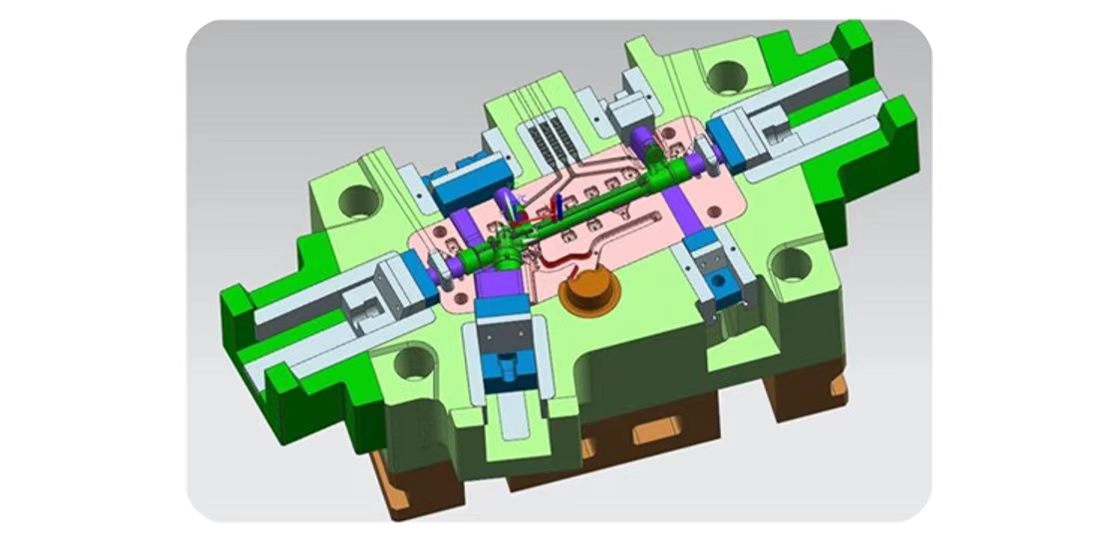
  • Five ways to extend the life of die cast tooling

    Five ways to extend the life of die cast tooling

    Extending the service life of die cast tooling is a critical goal within the die casting industry, as it directly impacts product costs and production efficiency.

    To achieve this objective, a series of measures can be taken to enhance the longevity of die casting molds, encompassing aspects such as mold structure design, material selection, heat treatment, production environment, and maintenance.

    1. Die cast tooling Structure Design:

    A well-designed mold structure forms the foundation for extending die casting moulds longevity. During the design process, factors such as alloy characteristics and product requirements should guide the selection of appropriate wall thickness and structure, avoiding overly complex geometric shapes that might lead to stress concentration and thermal stress. Uniform wall thickness design helps prevent the occurrence of excessively thick or thin regions. Furthermore, a well-designed gating system and effective venting contribute to reducing metal impact and porosity formation, thereby prolonging die cast tooling life.

    What are the methods to extend the service life of die-casting molds?1

    2. Selection of suitable materials for die cast tooling:

    Choosing high-quality mold materials suitable for die casting processes is of paramount importance. Premium hot work die steels like H13 and 8407 exhibit excellent heat resistance and wear resistance, making them suitable for various types of alloy die casting. For instance, employing molds made from 8407 or refined H13 can achieve an aluminum die cast tooling life of 70,000 to 100,000 cycles. Tailoring mold material selection to production requirements and alloy characteristics ensures adequate hardness and durability.

    What are the methods to extend the service life of die-casting molds?2

    3. Heat Treatment for Die Cast Tooling:

    The heat treatment process directly influences a mold’s mechanical properties and lifespan. Proper heat treatment techniques enhance hardness and wear resistance while reducing thermal stress. For example, employing a heat treatment process involving graded heating at 480°C, 700°C, and 850°C, followed by vacuum oil quenching at 1050°C and secondary tempering at 600°C, effectively increases mold longevity.

    What are the methods to extend the service life of die-casting molds?3

    4.The use of die cast tooling environment:

    Maintaining a controlled production environment helps minimize mold wear and damage. Stable working temperatures should be upheld, avoiding excessive temperature fluctuations that contribute to thermal stress. Likewise, maintaining stable cooling water temperatures and avoiding temperatures that are excessively high or low prevents adverse effects on the mold. Ensuring adequate lubrication during production reduces wear and friction. The preheating temperature for aluminum alloy die casting molds ranges from 150°C to 180°C, while the operating temperature falls between 180°C and 240°C. Opting for slightly higher temperatures can significantly extend mold life.

    What are the methods to extend the service life of die-casting molds?4

    5.Die Casting Moulds Maintenance:

    Regular mold maintenance is crucial to ensuring sustained stable operation. New molds should undergo stress-relief tempering and debugging upon initial use. During production, regular cleaning and lubrication of molds, as well as prompt repair of damaged components, prevent problems from worsening. Tailoring maintenance schedules based on die cast tooling lifespan allows for regular checks on wear and damage, and enables necessary repair measures to be taken.

    By implementing these comprehensive measures, the service life of die casting moulds can be significantly extended, leading to reduced losses and maintenance costs, ultimately resulting in heightened production efficiency and product quality. Ongoing vigilance concerning mold condition, combined with proactive maintenance efforts, empowers die casting enterprises to maintain optimal die casting moulds conditions, extend mold lifespan, and gain a competitive edge in the market.

Get A Free Quote Now !

Contact Form Demo (#3)